The First Swim
A framework for any creative threshold. Not the beginning of a career — the courage of any beginning. The step into cold water that is already, in itself, both the Vale and the Feste.
The First Swim is not about being new. It is about beginning — which is something you will do again and again across a creative life.
The first audition and the tenth production. The first essay and the one that finally breaks open. The day you leave one career to follow something true. The return after a long silence. The new form, the new medium, the new risk that arrives at fifty just as it did at twenty.
Every beginning asks the same things of you: step into water you cannot yet see the bottom of. Get cold. Go under. Come back up. Find your stroke.
These seven stages map that journey. They do not promise it gets easier. They promise you are not the first one in this water — and that there is a stroke waiting for you on the other side of learning it.
And here is what the name holds: the very act of stepping in is already a Vale — a cost, a leaving, a passage through cold and unfamiliar water. And every Vale, walked through honestly, opens into a Feste. The framework is the philosophy, made practical.
This is for the person standing at the edge of something real.
"To every thing there is a season, and a time to every purpose under the heaven — a time to weep, and a time to laugh; a time to mourn, and a time to dance."
— Ecclesiastes 3Standing at the Edge
The knowing before the doing.
You already know. That's the strange thing about this stage — it doesn't feel like not-knowing. It feels like standing in front of something real, feeling the weight of it, and choosing not to step yet.
Sometimes that's fear. Sometimes it's grief — for the self you'll have to leave behind when you go. Sometimes it's both at the same time, and they're indistinguishable.
I stood at the edge of a decision like this for almost a year before I made it — the decision to stop performing what was expected of me and begin writing what was actually true. I knew what I needed to do. I kept finding reasons why this month wasn't the right month. The edge was real. The water was real. And the waiting was its own kind of Vale — a long, quiet one that no one else could see.
The edge is not a failure. It is part of the swim. But there comes a moment when standing there becomes its own form of drowning — slower and less visible.
Journal Prompts — Stage 1
- What I'm waiting for — honestly, not the version I'd tell someone else
- What I'm afraid this beginning means about me
- What I already know that I'm pretending I don't
- The version of me who has already stepped in — what does she look like from here?
- The smallest possible step I could take before I close this journal
The First Step In
The cold is real.
There is no beginning that doesn't cost something. The first step into cold water is always colder than you expected — not because you were naive, but because some things cannot be known from the edge. You have to be in the water to know what the water is.
The first time I stepped into a role that asked me for something I hadn't given before, I remember the specific shock of it — not stage fright exactly, but the sudden awareness that I was no longer performing the idea of the character. I was in her. The water was her. And it was colder than I had imagined from the shore.
This stage is not the hard one. The cold is bracing, clarifying. You are in it now. There is something clarifying about no longer having to decide.
Journal Prompts — Stage 2
- What did the first step actually feel like — the real felt sense of it, not the story I'll tell later
- What I left behind at the edge — what I had to put down to step in
- What surprised me that I couldn't have known until I was in
- What is the cold asking me to pay attention to?
- What would it mean to trust the water?
Getting Cold
The discomfort that wasn't in the plan.
The beginning was brave. That was real. And then the second week came, or the second month, or the second year — and the bravery stopped carrying you forward and started just being weather. The cold settled in.
This is the stage people don't warn you about, because it doesn't have a name. It's not failure. It's not quitting. It is the sustained discomfort of being in something that hasn't become yours yet.
When I went back to school for clinical counseling — already a working actor, already a decade into finance — I remember the specific loneliness of being a beginner again in a room full of people for whom this was their first time. I was not a beginner at life. I was a beginner at this. The cold of that distinction took longer than I expected to get used to.
The mistake people make in this stage is to treat the cold as evidence that they chose wrong. It isn't. Cold is part of every beginning. The question is not how to stop being cold. It's how to keep swimming in it.
Journal Prompts — Stage 3
- What does the cold feel like right now — what form is the discomfort taking?
- What story am I telling myself about what the cold means?
- What would I say to someone else who was exactly where I am?
- What would it look like to keep going without the cold going away first?
- What has the cold shown me that I couldn't have seen from the warmth?
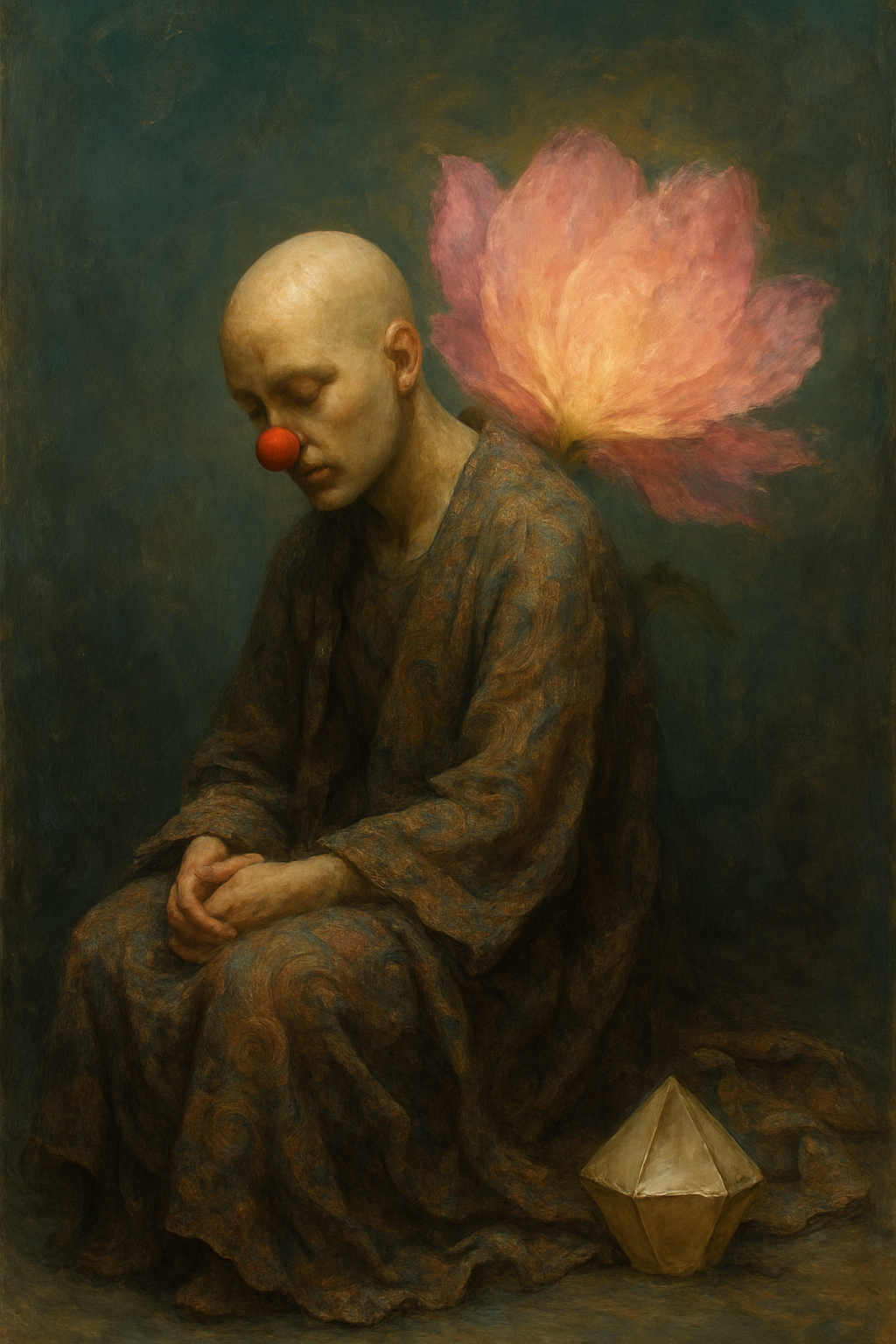
"Have patience with everything unresolved in your heart and try to love the questions themselves — live the questions now."
— Rainer Maria Rilke, Letters to a Young PoetGoing Under
The moment you lose the bottom.
This is the stage. The one that will ask the most of you and give you the most in return — though it won't feel like that while it's happening.
Going under is not the same as drowning. Drowning is what happens when you stop trusting that the surface is still there. Going under is what happens when the beginning gets honest with you — when the work strips away what wasn't true and shows you what's underneath. It is terrifying. It is also necessary.
Writing "My Anna Christie" — the essay that became my first published academic work — required me to go somewhere I had been protecting myself from. The character had asked me for something during the production that I had given and never fully accounted for. Writing about it meant going back under. The essay wasn't finished until I stopped trying to surface too quickly.
Every creative practice has a going-under moment. Sometimes many. The people who make it through are not the ones who don't go under. They are the ones who stopped fighting the current long enough to find which way was up.
Journal Prompts — Stage 4
- What does going under feel like right now — what is the water?
- What am I fighting against? What would happen if I stopped fighting it, just for today?
- What is this stage asking me to let go of?
- Who or what has been a surface for me — something that showed me the way back up before?
- What do I know about myself that going under has not been able to take from me?
Finding the Surface
Something holds.
You come back up. Not because the hard part is over, but because you kept going. Because something in you refused to stop. Because the surface was there the whole time, even when you couldn't feel it.
This stage is often quieter than people expect. There is no trumpet. The crisis passes. You take a breath. You are still here. The work is still here. You are still making it.
There was a particular morning — after a period of real professional and personal reckoning — when I realized I was still writing. I hadn't planned to be. I had planned to take a break. But I was still writing, almost without deciding to, because the work was more me than the difficulty was. Finding the surface looked like that: not a triumph, but a quiet continuity.
Journal Prompts — Stage 5
- What brought me back up? What was the surface, specifically?
- What do I know now that I couldn't have known without going under?
- What am I still carrying from under — what did I bring back up with me?
- What does it mean that I am still here?
- What does this beginning look like from here — what has changed in how I see it?
Learning to Float
Rest as practice.
Not every moment in the water is swimming. Some of it is floating — letting the water hold you while you catch your breath, look at the sky, remember why you got in.
Creative practices that last are built by people who learned to rest without leaving. This stage is about the sustainable rhythm that becomes possible after the struggle. Not coasting. Not stopping. Floating — which is its own skill, and one that takes practice.
The years I spent working in financial services were, in some strange way, a long float. I was not swimming in the direction I knew I needed to go. But I was not drowning either. I was resting in a way I couldn't have named then — taking in what that world knew, staying close to the water of the creative life without being in the current. I didn't understand until later what that float had given me.
Journal Prompts — Stage 6
- What does rest look like in my practice — what form does it actually take?
- Where have I been confusing rest with giving up?
- What is the water holding for me right now that I don't have to hold myself?
- What does a sustainable rhythm look like for me — not ideal, but actual?
- What would I do if I trusted that floating was enough for today?
Swimming
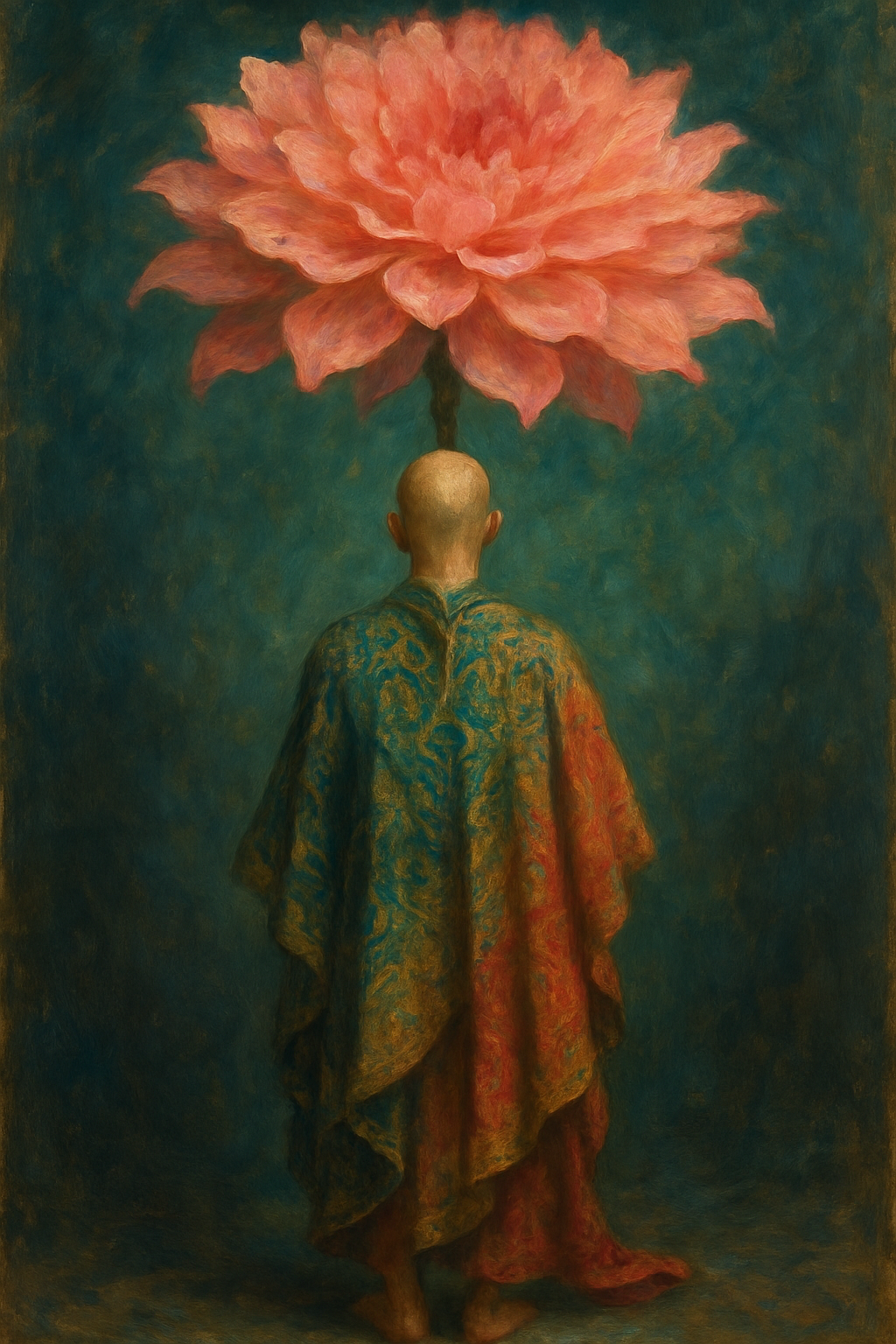
This is you now.
You have a stroke. It may not be the one you imagined from the edge. It is almost certainly not the one you would have invented without the cold, the going under, the finding the surface. But it is yours.
Swimming is not the end of the journey — it is the recognition that you are in it. That you have become someone who swims. That the water is yours now in a way it wasn't at the edge.
The first time I stood in front of a student or client and offered something — framework, question, reflection — from the fullness of what I had lived and learned and built, I felt it: the stroke. The particular combination of theatre and finance and counseling and years of thinking-through-doing that is mine and not anyone else's. FesteVale is that stroke. I am still swimming it.
And here is what no one tells you: swimming is also where you begin to see the next edge. The next body of water. The next beginning. The festival is real. It is the Feste after the Vale of learning. It will not last forever. It will come again.
Journal Prompts — Stage 7
- What is my stroke — the particular way I move through the creative life that is mine?
- What did the swim give me that the edge couldn't have given?
- What is worth celebrating right now, without qualification?
- Where do I see the next edge from here?
- What would I say to the person I was at Stage 1 — standing at the edge, not yet in?
The First Swim Bundle
The complete toolkit.
Journal pages for all seven stages, a framework guide that maps the whole journey in full, and a printable stage map — everything in one place.
Framework Guide · All 7 Stage Journal Sets · Printable Stage Map